
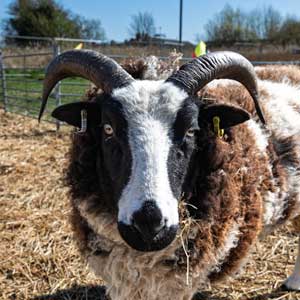
We have nine sheep
Sheep are highly social animals and live in groups called flocks. They have a strong flocking instinct, which helps protect them from predators in the wild. They possess surprisingly good memories and can recognize up to 50 individual sheep faces and remember them for years. They can also remember human faces. Sheep have a very wide field of vision, estimated to be around 300 to 320 degrees, allowing them to see behind themselves without turning their heads. However, they have poor depth perception.
These are are Marley and Cracker, Jacob sheep, a distinctive British breed of domestic sheep known for its unique appearance.
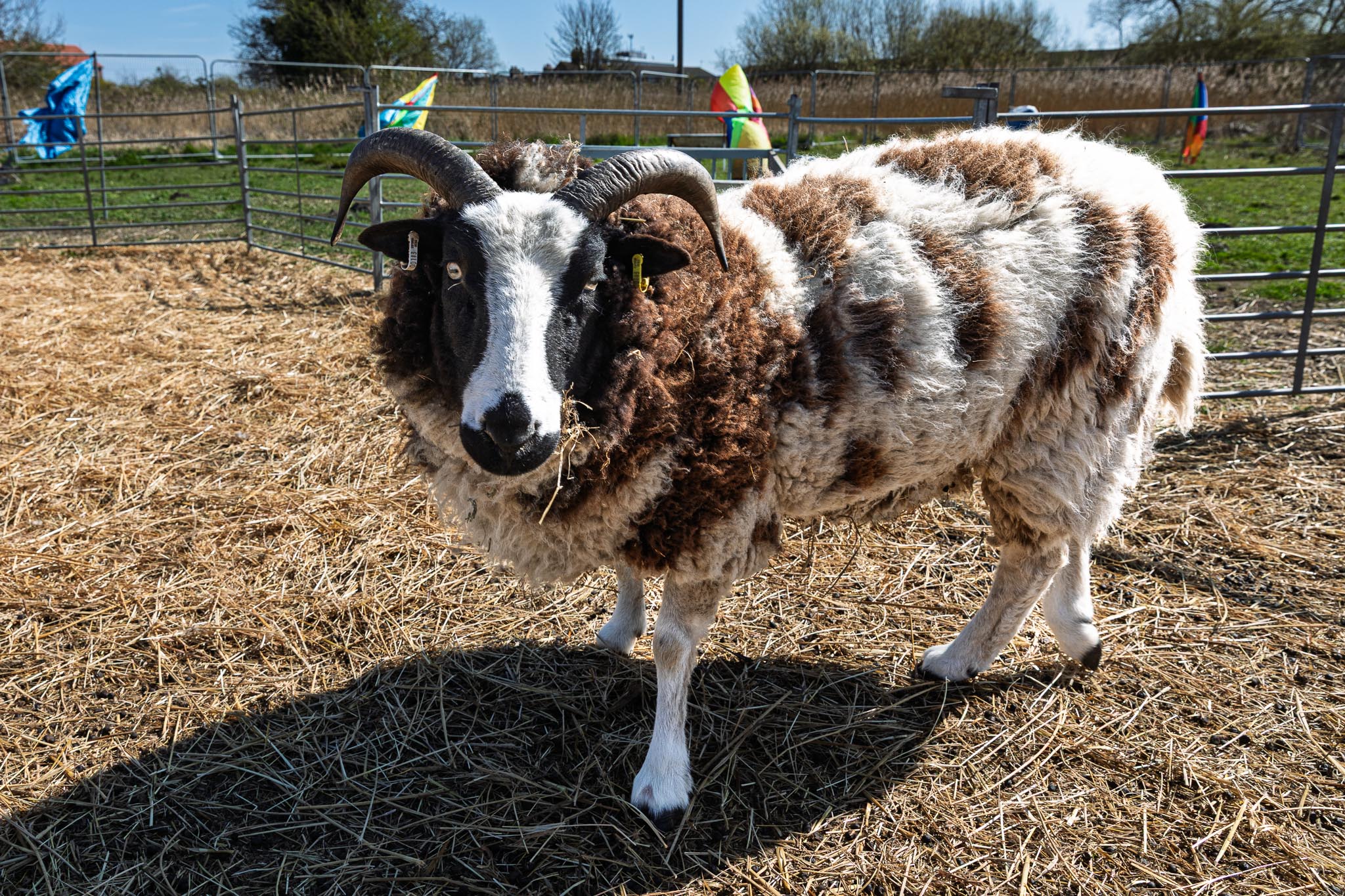
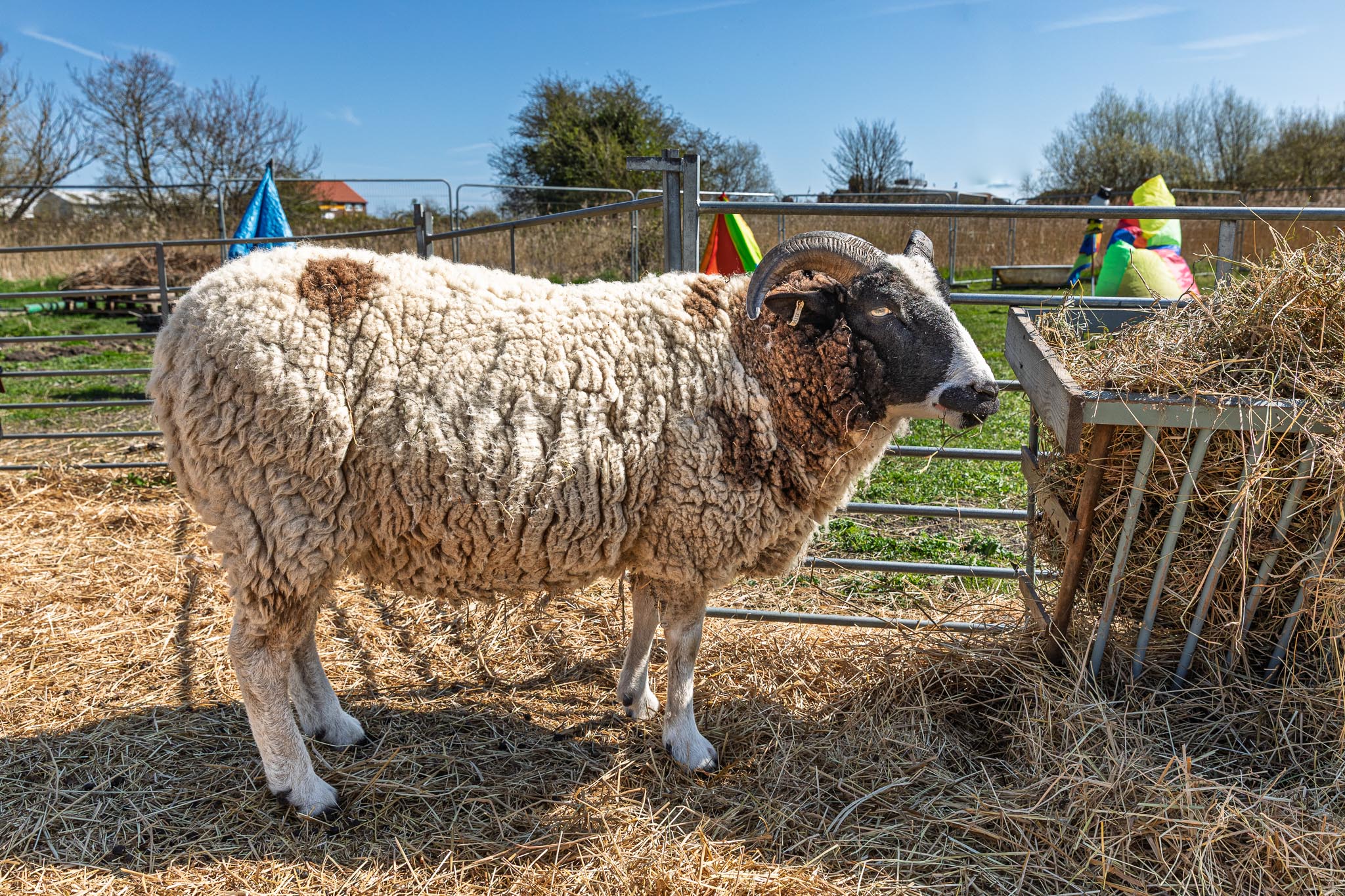 The breed's name is linked to the story of Jacob in the Old Testament, who, according to the narrative, bred a flock of spotted sheep.They are a piebald breed, meaning they have dark brown or black patches on a white fleece. They are also polycerate, an unusual trait in sheep that means they often have multiple horns, typically four, but sometimes more or less. They are considered an "Old World" or heritage breed that likely originated in the Middle East, North Africa, and parts of Asia over 3,000 years ago.
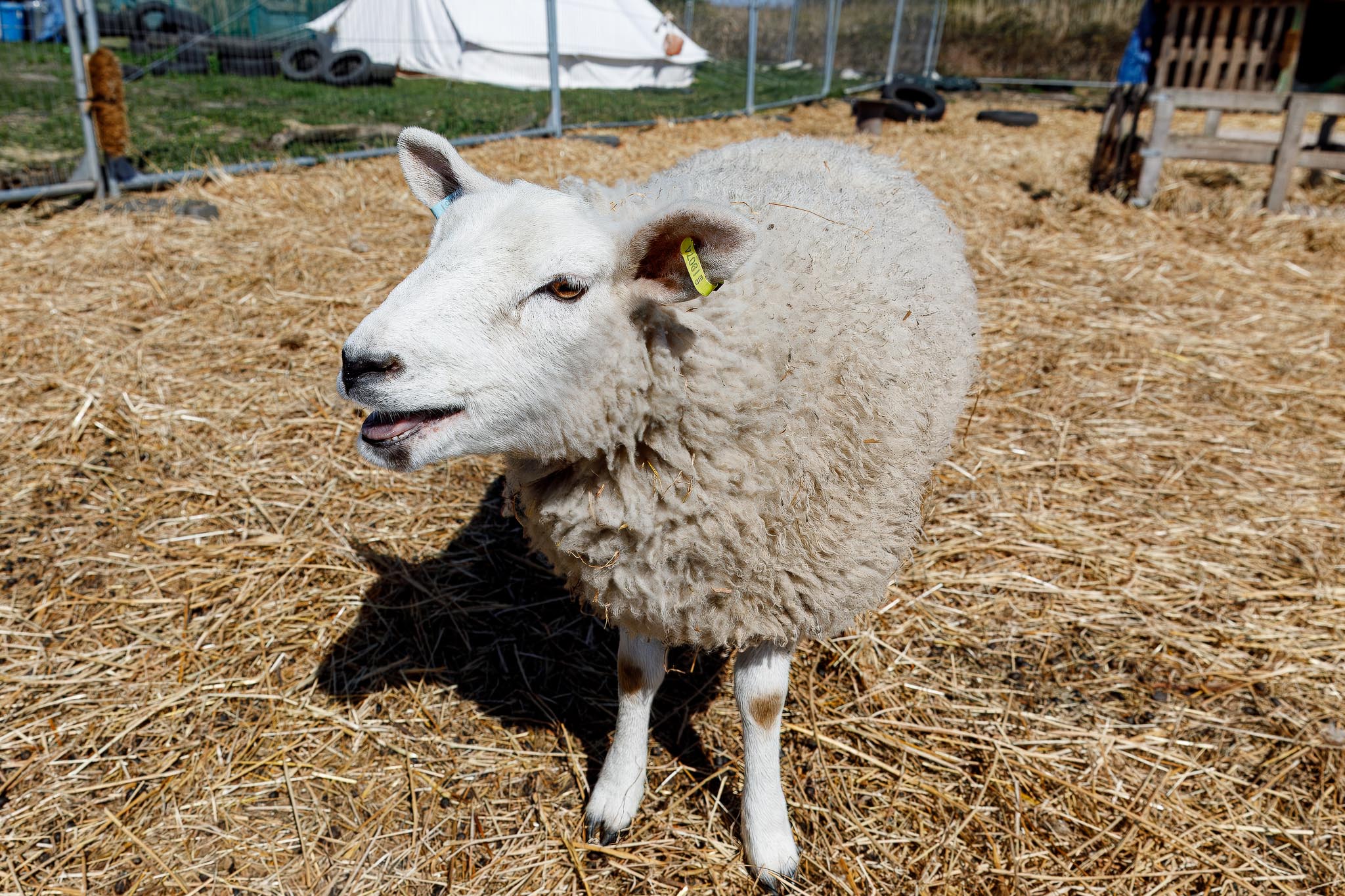 The Texel is a breed that is justly famous: a highly adaptable breed that makes its home anywhere. The Texel sheep originates from the island of Texel, one of the north-western islands off Holland where the ancient native sheep was known as Pielsteert (Pin-tail, because of its thin short tail). In an attempt to improve prolificacy, growth rate and size several English breeds such as Lincoln, Leicester and Wensleydale were introduced at the end of the nineteenth century. Rigorous selection resulted in the development of a large, prolific and well muscled sheep. 1909 saw the formation of the first Texel breed society in North Holland which in 1911 issued the first description of type.